Keep the timing behind a blood result
Record blood draw and relevant last-dose timestamps, calculate elapsed time and retain provider sampling conditions where configured.
Enter the times you actually know
Keep the gap between a relevant dose and your blood draw with the test. It helps you retain the sampling context your specialist asked for.
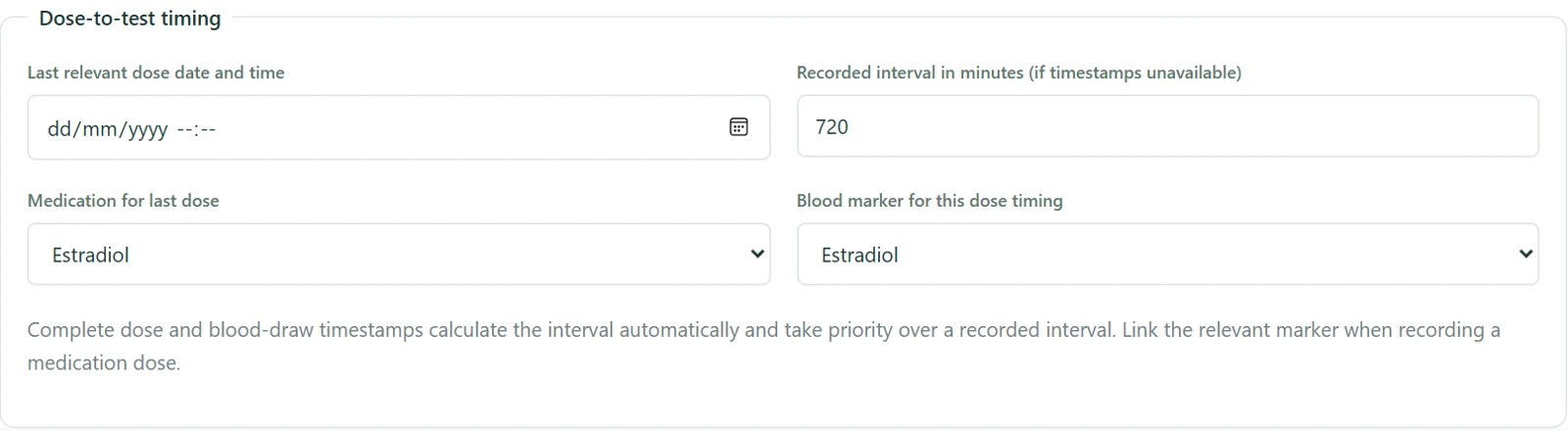
Elapsed time across dates
Enter the last dose and blood draw timestamps to calculate the gap, including across midnight. If you only know the interval, record it directly instead.
Keep timing linked to the right medication
Link timing to the relevant medication and marker. A gel sampling instruction should not become a timing rule for an unrelated injection or another blood result.
Keep your specialist’s sampling instructions close
If your specialist specifies a sampling window, see whether the recorded timing matches. Missing or mismatched timing is shown clearly rather than guessed.
Treatment Adherence Analytics
See a timing score for each daily medication, with average interval and average deviation from its recorded daily frequency. Compare 7 days, 30 days or 3 months and include the timing information in a report. Scores use recorded actual dose times only; they are not clinically validated measures of adherence and cannot establish why a blood result changed.
Keep your treatment information together
A personal record, not a diagnosis or treatment recommendation.